





WELCOME TO THE
Alternatives Investing Center
Optimize client outcomes by integrating alternative and traditional investments within a thoughtful portfolio construction framework.





About Us
Morgan Stanley Investment Management has been investing in private markets for over 40 years and is widely recognized as a pioneer in allocating across alternatives. We’re uniquely positioned to help financial advisors optimize client outcomes by integrating alternative and traditional investments within a thoughtful portfolio construction framework.
Why Invest in Alternatives
With new fund structures making private investments more available to accredited and mass affluent investors, increasing advisor education and knowledge on private market investing has become essential.

• Macro
• Equity Hedge
• Relative Value
• Event Driven
• Direct Lending
• Asset-based Finance
• Distressed Debt
• Mezzanine Lending
• Special Situations
• Venture Debt
• Buyout
• Growth
• Venture Capital
• Core
• Core Plus
• Value Add
• Core
• Core Plus
• Value Add
• Opportunistic


Source: Bloomberg, Morgan Stanley Wealth Management Global Investment Office, Private Equity Index Data: The Cambridge Associates Private Equity Index tracks the returns of a variety of private equity strategies, including buyout, control-oriented distressed, growth equity, energy, upstream energy and royalties, and venture capital. The data is updated quarterly using the Cambridge Associates Benchmark Calculator, with a lag of several months. Private equity returns are net to limited partners. Stocks are represented by the S&P 500 Total Return Index. Bonds are represented by Bloomberg US Aggregate. Alternatives Investments are composed of 16.6% Equity Hedge (HFRI Equity Hedge Index), 16.6% Equity Neutral (HFRI Equity Market Neutral Index), 33% Private Equity, and 33% Real Estate (National Council of Real Estate Investment Fiduciaries Property Index – NCREIF). Alternatives Investments are not suitable for all investors.
Past performance is no guarantee of future results. Estimates of future performance are based on assumptions that may not be realized. This material is not a solicitation of any offer to buy or sell any security or other financial instrument or to participate in any trading strategy. Please refer to important information, disclosures and qualifications at the end of this material.
Alts Essentials
Alternative investments represent strategies that can deliver different sources of return than traditional stocks and bonds—making them important components of portfolio construction. These foundational videos provide a high-level overview of key segments within the alternatives universe.









On Demand Classes
Class 1
Portfolio Construction & Asset Allocation
Now On Demand
The Portfolio Construction and Asset Allocation session discusses how portfolios can be built to reflect the specific characteristics and needs of each investor.
Learning Objectives:
- Define the characteristics of clients that shape their preferences for investments ranging from aggressive to moderate to conservative risk tolerance
- Discuss investor goals, including risk, return, inflation, taxes, downside protection, and thematic and tactical allocations
- Identify asset allocation methodologies, including capitalization-weighted global portfolios, scenario-based portfolios, risk parity, optimized quantitative portfolios, and the role of alternative investments
CREDITS
2
CFP / CFA
CE Credits
Class 2
Private Equity & Venture Capital
Now On Demand
The Private Equity Co-Investments session explores the ability to make direct investments in companies alongside private equity sponsors. Co-Investments offer investors favorable terms by minimizing traditional management fees and carried interest.
Learning Objectives:
- Understand how private equity co-investments are structured to maintain an alignment of interests between co-investors and sponsors.
- Discuss the reasons sponsors are often motivated to offer access to co-investments on terms that are similar to those of the sponsor.
- Understand different types of co-investment strategies.
CREDITS
1
CFA / CPD
CE Credit
Upcoming Classes
Class 3
Evergreen Private Equity: The Future or a Fad?
October 6, 2026
The Evergreen Private Equity: The Future or a Fad session discusses why investors have increasingly embraced semi-liquid evergreen funds to access private equity investments.
Learning Objectives:
- Discuss the diversification benefits of a private equity allocation for individual investors
- Understand the difference between semi-liquid evergreen fund and a closed-end drawdown fund
- Explain the different roles private equity strategies play within an evergreen structure
CREDITS
1
CFP / CFA
CE Credit
Class 4
MSIM’s Approach to Allocating to Private Markets
November 3, 2026
The MSIM’s Approach to Allocating to Private Markets session discusses our proprietary Private Markets Asset Allocation Framework (PMAAF), designed to help investors think about how to allocate their dry powder across private markets and cycles.
Learning Objectives:
- Understand the challenges investors face when building a private markets allocation
- Outline our approach to forming medium term signals across private markets asset classes
- Examples of views expressed in portfolio positioning
CREDITS
1
CFP / CFA
CE Credit
Class 5
Real Estate & Infrastructure
December 1, 2026
The Real Estate and Infrastructure session provides an overview of real asset investing, including real estate, infrastructure, farmland, timberland, and commodities.
Learning Objectives:
- Understand the opportunities presented by private and public investments in real estate, infrastructure, and other real assets
- Differentiate between the risk and return tradeoffs of core, core-plus, value-added, and opportunistic investments
- Discuss the relationship between inflation and the returns to stocks, bonds, and real asset investments
CREDITS
2
CFP / CFA
CE Credits
Featured Insights
-

Why Invest in Private Equity?
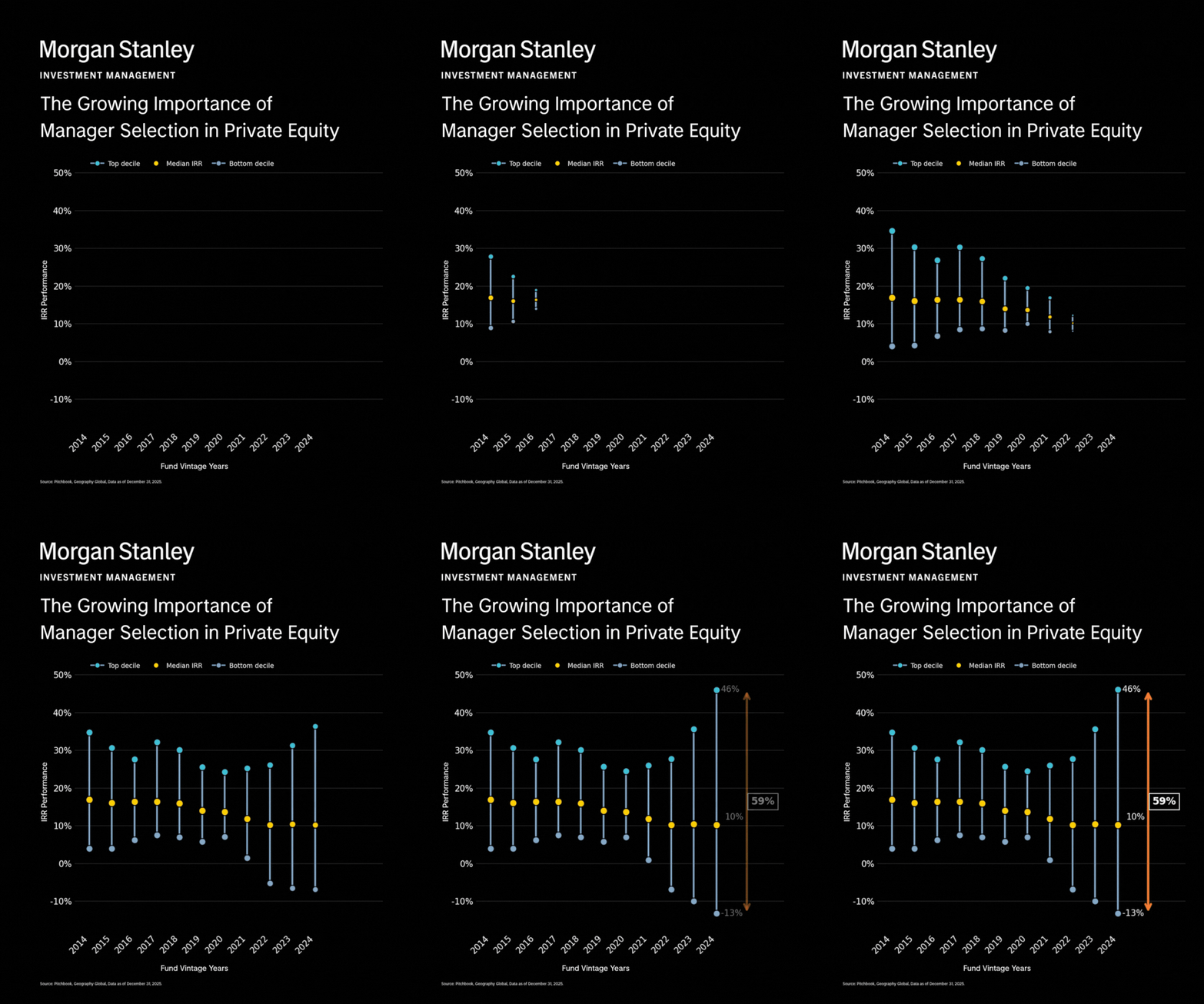
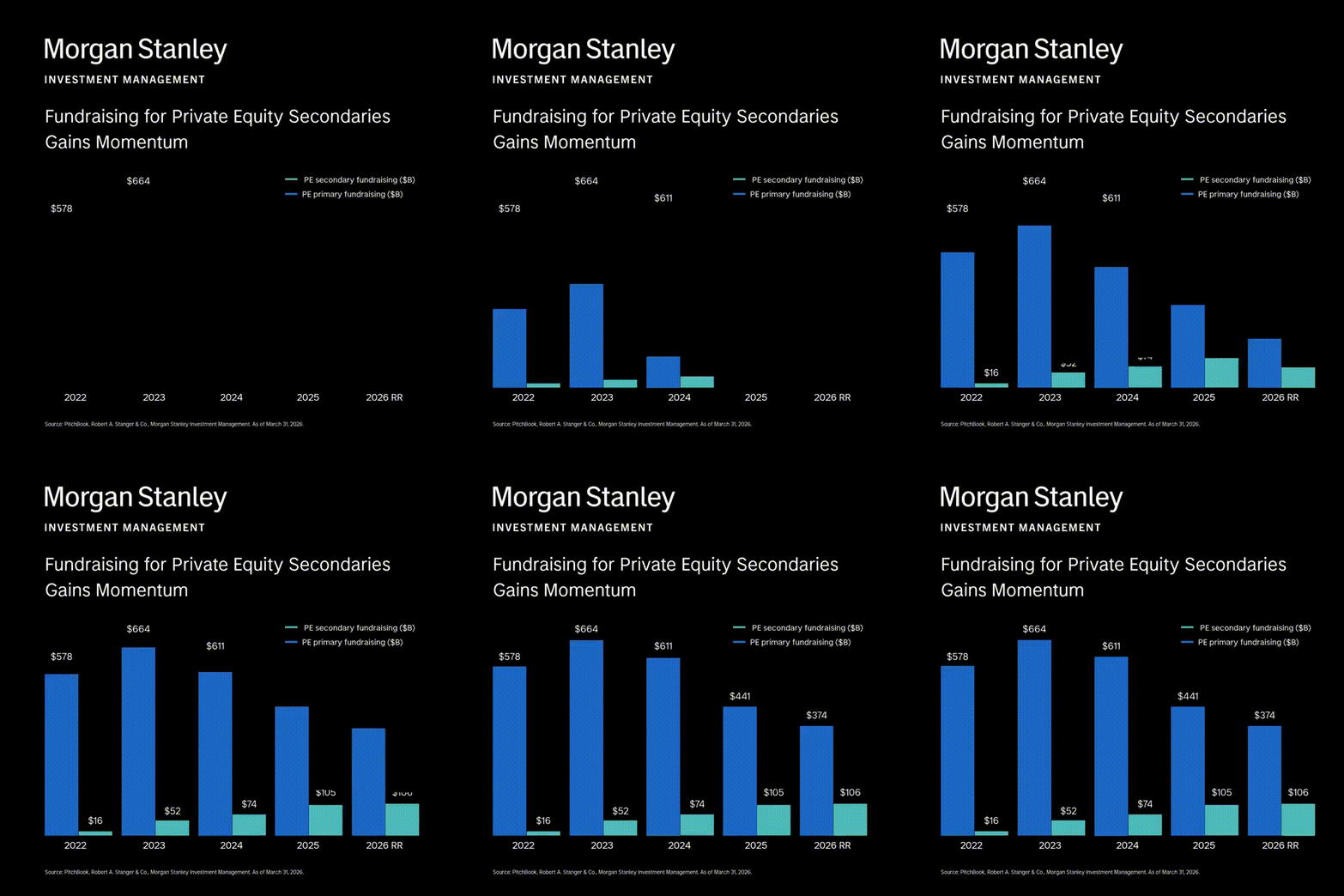
Private equity is one of the main ways investors gain exposure to privately held companies. It has historically delivered better long-term risk-adjusted returns than public equity1, achieving this primarily by making operational improvements across portfolio companies, with the aim of growing revenues and expanding margins.
-

Asset Class Introduction: Net Leasing
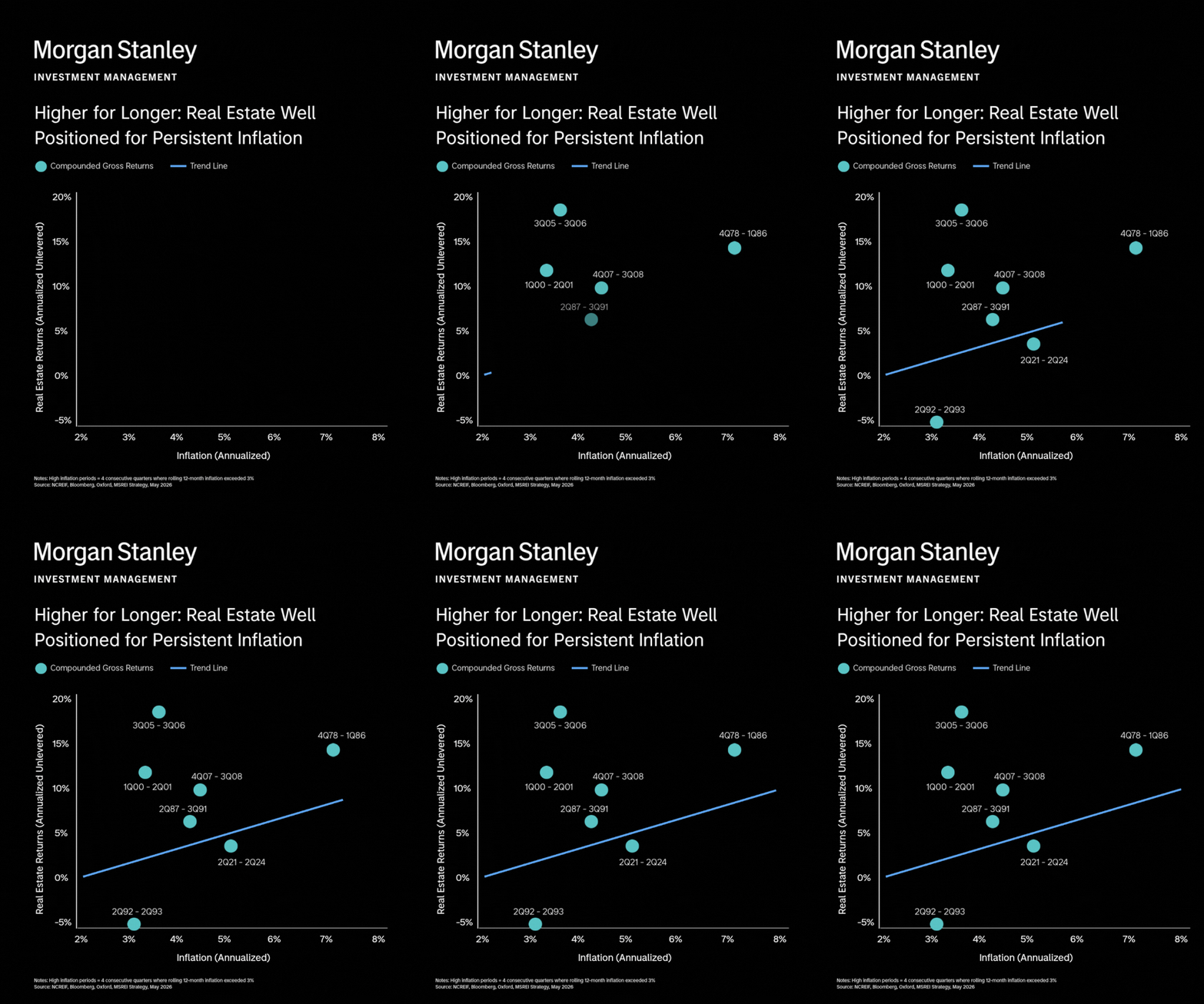
A Net Lease is a long-term, single-tenant lease where the tenant pays base rent plus some or most operating expenses such as taxes, insurance, and maintenance. For investors, it offers predictable cash flows, appreciation potential, certain tax advantages as well as a potential hedge against inflation.
-

Asset Class Introduction: Private Credit
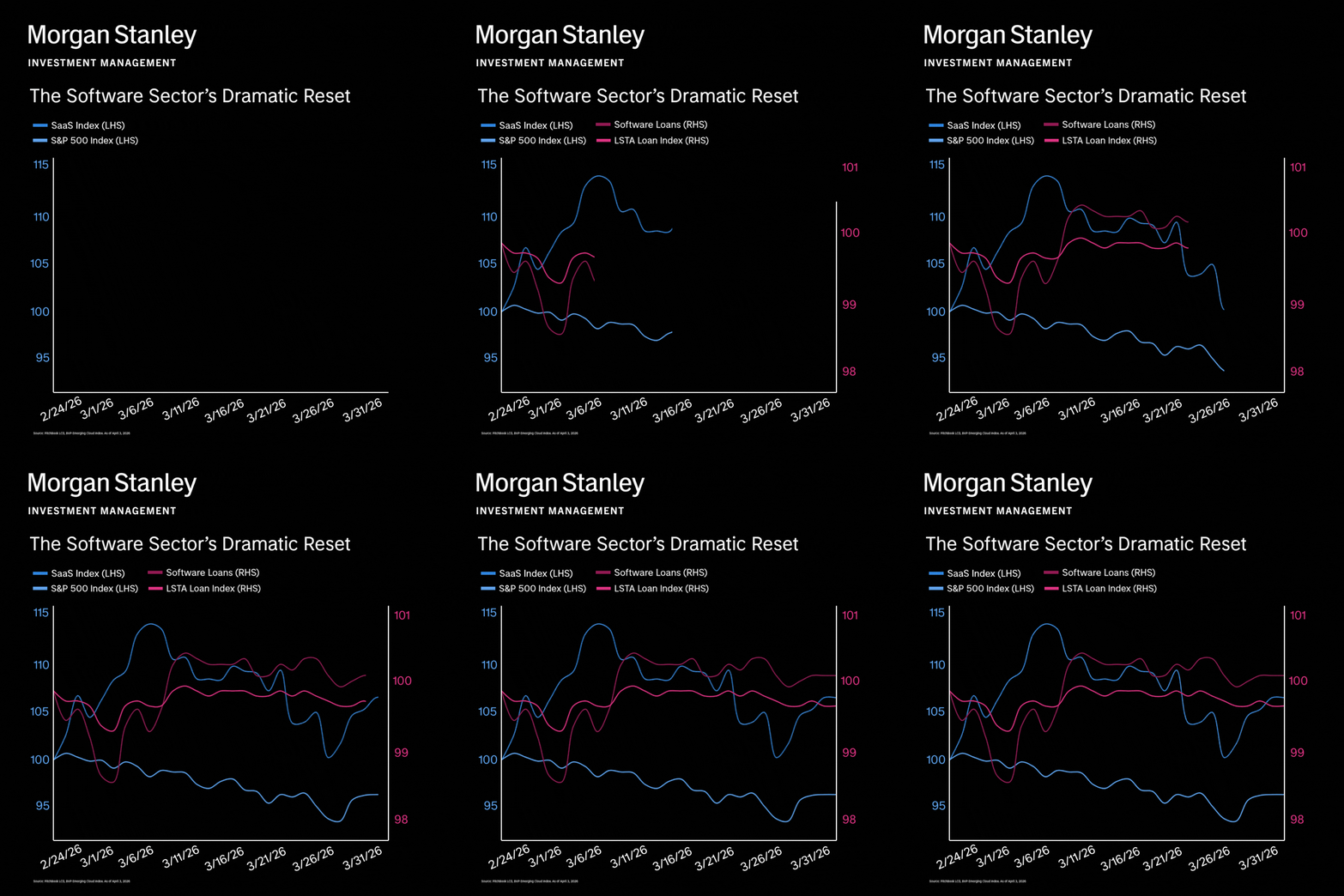
Private Credit has grown in recent years to become one of the primary ways companies raise capital. While the private credit market, which amounts to roughly $2.7 trillion1, has been around for decades, its popularity began to grow in earnest in the wake of the 2008 financial crisis, when non-bank lenders stepped in to provide…



FEATURED
Morgan Stanley Investment Management Alternatives
We have been committed to managing alternative investment strategies since 1985. Today, we are a leading provider across private equity, private credit, hedge funds, real estate and infrastructure.